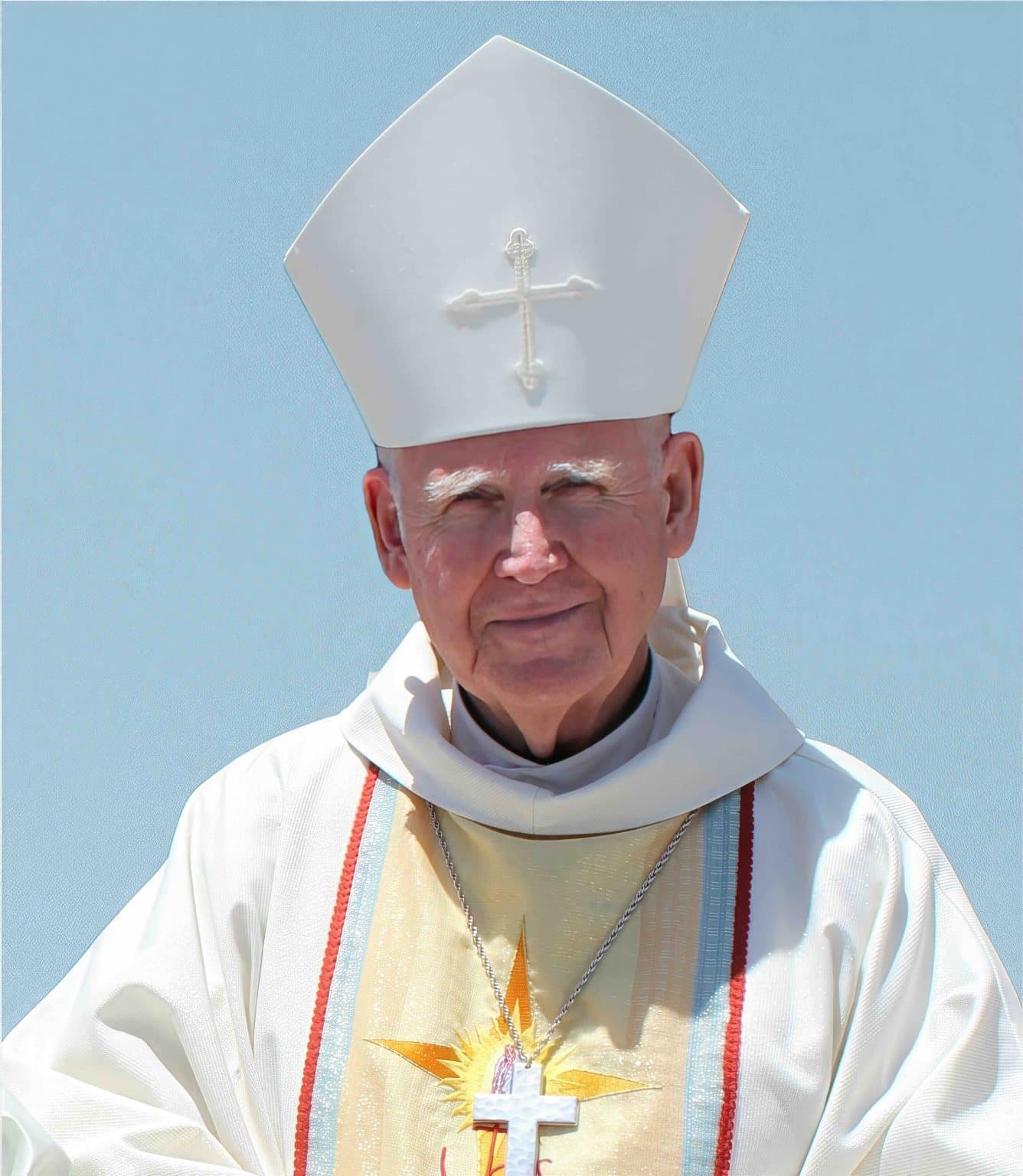
Phillip F. Straling, a native of San Bernardino, was ordained the founding Bishop of the Diocese of San Bernardino on July 18, 1978, in one of the final episcopal appointments of Pope Paul VI. Deeply rooted in the local Church, he was baptized at Holy Rosary Church—where his parents were married and where he later served as pastor—and was ordained a priest for the Diocese of San Diego on March 19, 1959. After eleven years in campus ministry with the Newman apostolate and service as executive secretary of Synod II, a major consultative effort in San Diego, he returned to San Bernardino in 1976 as pastor of Holy Rosary Parish. As the first bishop of the newly established diocese, Bishop Straling emphasized unity, collaboration, and the empowerment of the laity, appointing sisters and lay leaders to key parish and school roles, establishing a bilingual Diaconate Program, and founding the Straling Leadership Institute in 1980 to form lay ecclesial leaders. During his tenure, the Catholic population grew from approximately 235,000 to more than 800,000, and the number of parishes increased from 85 to 105. In 1995, Pope Saint John Paul II appointed him Bishop of the reconstituted Diocese of Reno, where he was installed on June 29 and served until his retirement in 2005. He now holds the title of Bishop Emeritus of Reno.
Auxiliary Bishop Dennis P. O'Neil
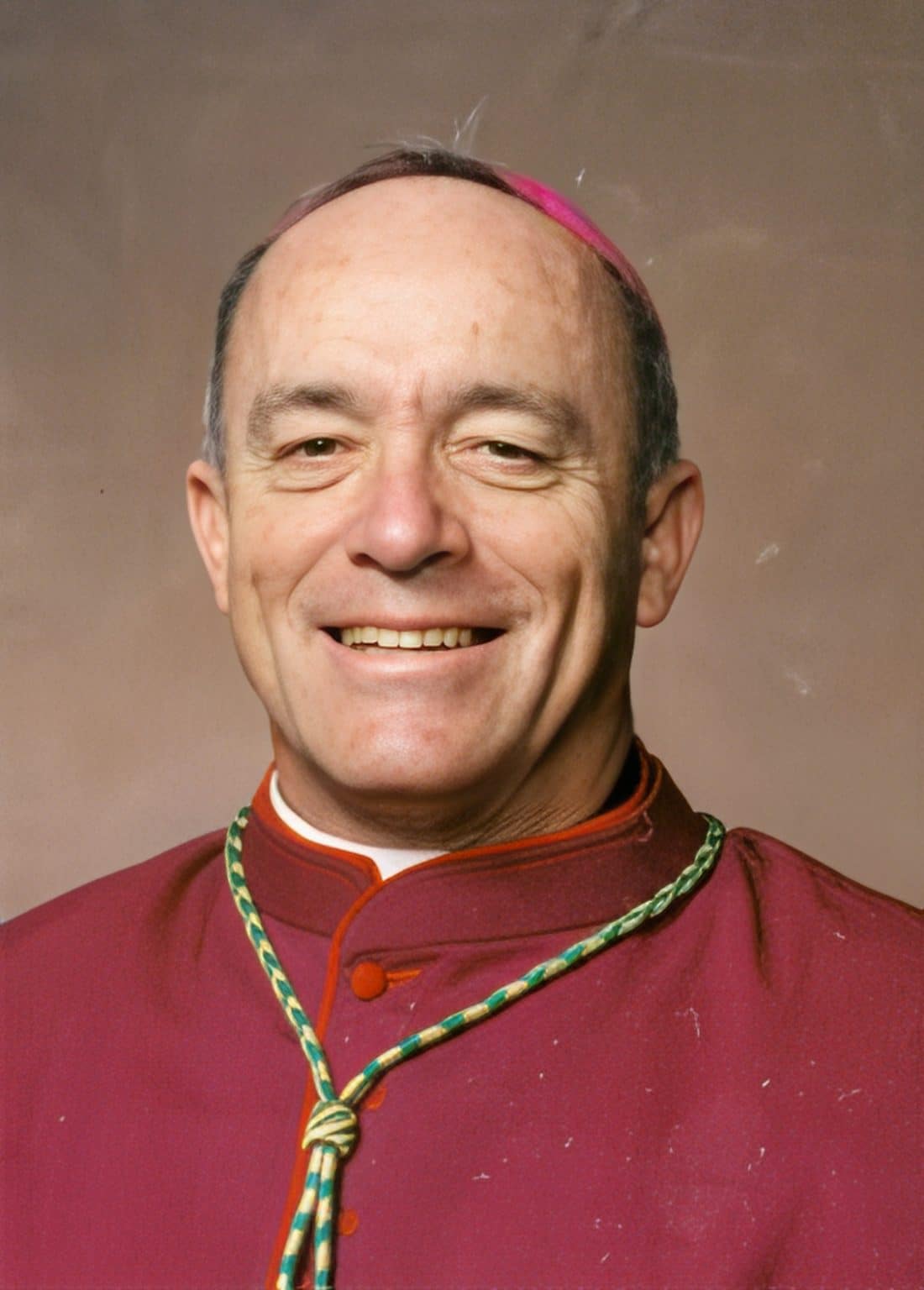
Dennis Patrick O’Neil was ordained as the second Auxiliary Bishop of the Diocese of San Bernardino on March 27, 2001. He came to the diocese after 34 years of priestly ministry in the Archdiocese of Los Angeles where he worked closely with many ethnic communities including Hispanics, Vietnamese and Native Americans. He helped to revitalize the poor, immigrant St. Thomas the Apostle parish in the Pico Union area of Los Angeles. His episcopacy in the Church of San Bernardino was marked by a close involvement in parish-level ministries. Bishop O’Neil also continued his lifelong ministry to promote the diversity of the Catholic Church, serving as director of the diocesan Office of Ethnic Affairs. He was returned to God on October 17, 2003.
Bishop O’Neil’s Episcopal motto was “Amate Invicum,” a translation of from St. John’s Gospel call to “love one another.” “It is the call to live out those words, which make Christians different and which has to be the central point of our lives as we journey toward all that God has planned for us,” he wrote.