




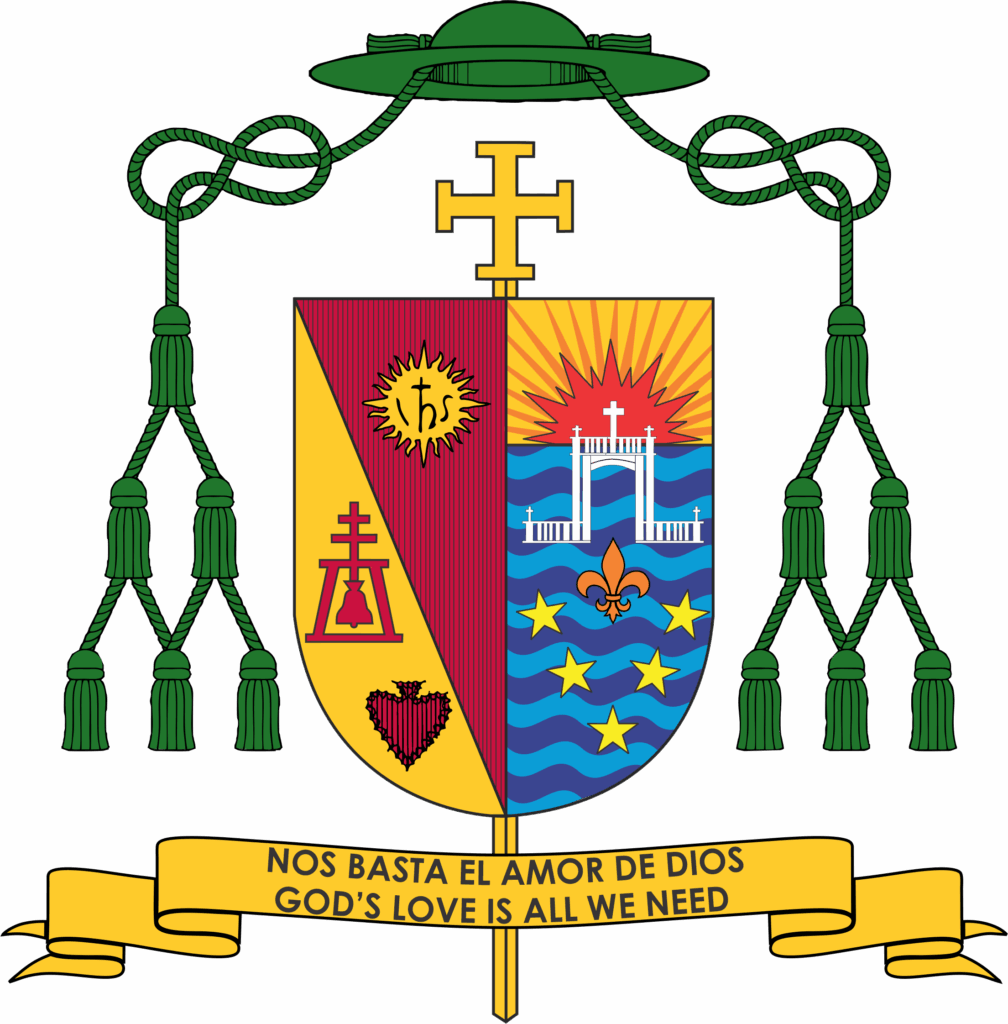
July 27, 2021
Brothers and Sisters in Christ,
Peace and well-being to you. Please know of my continued blessings and prayers for you and
yours as you journey in our beautiful Catholic faith. May we always keep in our hearts and
minds that God walks with us, in both good times and challenging times. View PDF: Statment | Decree
Today, I wish to inform you of our diocesan response to the Apostolic letter, Traditionis
custodes, issued earlier this week by the Holy Father regarding the celebration of the Latin
Mass. In this document, Pope Francis has sought to place greater jurisdiction over the
celebration of this rite in the hands of the Ordinary Bishop. The document also calls us to unity
in the celebration of the Eucharist, reaffirming the primacy of the Ordinary form of the Mass
that we have practiced since the Second Vatican Council.
The celebration of the Latin Mass occurs on a limited basis in our Diocese, offered weekly in
two of our parishes. Having reviewed Traditionis custodes and reflected on the spiritual needs
that are fulfilled by the limited offering of the Latin Mass in our Diocese, I have made the
decision that we will continue to offer the Latin Mass at these two parishes on the current
schedule.
This will require me to make a dispensation from one article of Traditionis custodes. In
addition, the readings for these parish celebrations of the Latin Mass are to be proclaimed in
the vernacular language, using translations of the Sacred Scripture approved for liturgical use
by the United States Conference of Catholic Bishops. Finally, priests in our diocese who wish
to celebrate the Latin Mass at one of these two designated parishes will now need to first
obtain faculties to do so from the Diocesan Bishop.
In closing, let us remember that we are one in the celebration of the Eucharist, as we receive
essential nourishment by partaking in the real presence of the Body and Blood of our Lord
Jesus Christ. All the different rites of the Mass have this common purpose and gift to us.
May God continue to bless you and your loved ones.
In Christ,
Bishop Alberto Rojas
Diocese of San Bernardino
27 de Julio 2021
Hermanos y Hermanas en Cristo,
Paz y bienestar esté con ustedes. Por favor sepan de mis bendiciones y oraciones continuas
para ustedes y sus seres queridos mientras caminan en nuestra bella fe Católica. Tengamos
siempre en nuestros corazones y nuestras mentes que Dios camina con nosotros, tanto en
tiempos buenos como tiempos restantes.
Hoy, quiero informarles de nuestra respuesta Diocesana a la carta Apostólica,Traditionis
custodes, emitida el 16 de julio del 2021 por el Santo Padre con respecto a la celebración de
la Misa en Latín. En este documento, el Papa Francisco ha buscado poner mayor jurisdicción
sobre la celebración de este rito en las manos del Obispo Ordinario. El documento también
nos llama a la unión en la celebración de la Eucaristía, reafirmando la primacía de la forma
Ordinaria de la Misa que hemos practicado desde el Concilio Vaticano Segundo.
La celebración de la Misa en Latin ocurre de manera limitada en nuestra Diócesis, se ofrece
semanalmente en dos de nuestras parroquias. Después de haber revisado y reflexionado
sobre las necesidades espirituales que se llenan por el ofrecimiento limitado de la Misa en
Latín en nuestra Diócesis, he tomado la decisión que continuaremos ofreciendo la Misa en
Latín en estas dos parroquias en el horario actual.
Esto requerirá que haga una dispensación de un artículo de Traditionis custodes. Además, las
lecturas para estas celebraciones parroquiales de la Misa en Latín se deben proclamar en el
vernáculo, usando la traducción de las Sagradas Escrituras aprobadas para uso en la liturgia
por la Conferencia de los Obispos Católicos de los Estados Unidos. Finalmente, los
sacerdotes de nuestra Diócesis que quieran celebrar la Misa en Latín en una de estas dos
parroquias designadas ahora necesitarán obtener primero las facultades del Obispo
Diocesano para hacerlo.
En conclusión, recordemos que somos uno en la celebración de la Eucaristía, ya que
recibimos la nutrición esencial al compartir en la presencia real del Cuerpo y la Sangre de
nuestro Señor Jesucristo. Todos los diferentes ritos de la Misa tienen este propósito y don en
común.
Que Dios continúe bendiciéndolos a ustedes y a sus seres queridos.
En Cristo,
Obispo Alberto Rojas
Diócesis de San Bernardino
ECREE IMPLEMENTING THE MOTU PROPRIO,
TRADITIONES CUSTODES,
IN THE DIOCESE OF SAN BERNARDINO
IN THE NAME OF Goo. AMEN.
Whereas, the Supreme Pontiff Francis has issued an Apostolic Letter motu proprio On the Use of
the Roman Litw-gy Prior to the Reform of 1970, Traditionis custodes, effective immediately upon
promulgation in L ‘Osservatore Romano;
Whereas, according to this Apostolic Letter it is the exclusive competence of the diocesan bishop
“to authorize the use of the 1962 Roman Missal in his diocese according to the guidelines of the
Apostolic See” (Art. 2);
Whereas, the “bishop of the diocese in which until now there exist one or more groups that
celebrate according to the Missal antecedent to the reform of 1970 is to determine that these groups
do not deny the validity and the legitimacy of the liturgical refo1m, dictated by Vatican Council II
and the Magisterium of the Supreme Pontiffs”(Art. 3, § 1);
Whereas, the diocesan bishop “is to designate one or more locations where the faithful adherents of
these groups may gather for the eucharistic celebration (not however in the parochial churches and
without the erection of new personal parishes)” (Art. 3, § 2);
Whereas, the Mass according to the Missale Romanum of 1962 has been celebrated regularly in the
parishes of San Secondo d’Asti, Guasti and Sacred Heart, Palm Desert since the promulgation of the
motu proprio Summorum Pontificum of Pope Benedict XVI;
Whereas, according to canon 87, § I of the Code of Canon Law, “A diocesan bishop, whenever he
judges that a dispensation will contribute to their spiritual good, is able to dispense the faithful from
universal and particular disciplinary laws issued for his territory or his subjects by the supreme
authority of the Church.”
Therefore, I, the Most Reverend Alberto Rojas, by the Grace of God and favor of the Apostolic
See, Bishop of San Bernardino in California, do hereby decree the following:
1. It has been determined that the priests who celebrate the Mass regularly in the parishes
of San Secondo d’Asti in Guasti and Sacred Heart in Palm Desert do not deny the
validity and the legitimacy of the liturgical reform as dictated by Vatican Council II and
the Magisterium of the Supreme Pontiffs, and therefore may continue to use the 1962
Roman Missal (Art. 3, § 1).
2. Since it will contribute to the spiritual good of the faithful, to the extent that it may be
needed, a dispensation is granted from Art. 3, § 2 of Traditionis custodes authorizing the
use of the 1962 Roman Missal at the parish churches San Secondo d’Asti in Guasti and
Sacred Heart in Palm Desert. Eucharistic celebrations are permitted at these locations
using the Roman Missal promulgated by Saint John XXIII in 1962 on any or all days of
the year. In these celebrations the readings are proclaimed in the vernacular language,
using translations of the Sacred Scripture approved for liturgical use by the United States
Conference of Catholic Bishops (Art. 3, § 3).
3. Priests who already celebrate Mass according to the Missale Romanum of 1962 in the
Diocese of San Bernardino are authorized to continue to enjoy this faculty upon request
of the diocesan bishop (Art. 5).
This Decree is effective upon promulgation. Given at the Chancery of the Diocese of San
Bernardino in San Bernardino, California, on the Twenty-Third of July, in the Year of our Lord,
Two Thousand Twenty-One.
DECRETO QUE IMPLEMENTA EL MOTU PROPRIO,
TRADITIONIS CUSTODES
EN LA DIÓCESIS DE S AN B ERNADINO
EN EL NOMBRE DE DIOS AMÉN.
CONSIDERANDO que el Sumo Pontífice Francisco ha publicado, en forma de motu proprio, una Carta
Apostólica, Traditionis custodes, sobre el uso de la liturgia romana antes de la reforma de 1970, la cual entra
en vigor inmediatamente al momento de su promulgación en L’Osservatore Romano;
CONSIDERANDO que conforme a esta Carta Apostólica es exclusiva competencia del obispo diocesano
«autorizar el uso del Missale Romanum de 1962 en la diócesis, siguiendo las orientaciones de la Sede
Apostólica» (Art. 2).
CONSIDERANDO que «el obispo, en las diócesis en las que hasta ahora hay presencia de uno o más grupos
que celebran según el misal anterior a la reforma de 1970 debe comprobar que estos grupos no excluyan la
validez y la legitimidad de la reforma litúrgica, de los dictados del Concilio Vaticano II y del Magisterio de
los Sumos Pontífices» (Art. 3, § 1);
CONSIDERANDO que el obispo diocesano debe «indicar uno o varios lugares donde los fieles
pertenecientes a estos grupos pueden reunirse para la celebración de la Eucaristía (no en las iglesias
parroquiales y sin erigir nuevas parroquias personales)» (Art. 3, § 2);
CONSIDERANDO que desde la promulgación del motu proprio Summorum pontificum del Papa Benedicto
XVI se ha celebrado con regularidad la Santa Misa conforme al Missale Romanum de 1962 en las parroquias
de San Secondo d’Asti en Guasti y Sagrado Corazón en Palm Desert;
CONSIDERANDO que a tenor del canon 87, §1 del Cόdigo de Derecho Canónico «el Obispo diocesano,
siempre que, a su juicio, ello redunde en bien espiritual de los fieles, puede dispensar a éstos de las leyes
disciplinares tanto universales como particulares promulgadas para su territorio o para sus súbditos por la
autoridad suprema de la Iglesia»;
Por lo expuesto, yo, S.E.R. Alberto Rojas, por la gracia de Dios y de la Sede Apostólica obispo de San
Bernardino en California, DECRETO lo siguiente:
1. Se ha determinado que los presbíteros que celebran la Santa Misa con regularidad en las
parroquias de San Secondo d’Asti en Guasti y Sagrado Corazón en Palm Desert no excluyen la
validez y la legitimidad de la reforma litúrgica, de los dictados del Concilio Vaticano II y del
Magisterio de los Sumos Pontífices, y por ende pueden continuar utilizando el Misal Romano de
1962 (Art. 3, § 1).
2. Puesto que esta contribuirá al bien spiritual de los fieles, hasta donde sea necesaria, se otorga una
dispensa del Art. 3, § 2 de Traditionis custodes autorizando el uso del Misal Romano de 1962 en
las iglesias parroquiales de San Secondo d’Asti en Guasti y Sagrado Corazón en Palm Desert. Se
permiten las celebraciones eucarísticas en estos sitios utilizando, en cualquier día o en todos los
días del año, el Misal Romano promulgado por San Juan XXIII en 1962. En estas celebraciones
las lecturas se proclamarán en lengua vernácula, utilizando las traducciones de la Sagrada
Escritura aprobadas por la Conferencia de Obispos Católicos de los Estados Unidos (Art. 3 § 3).
3. Los presbíteros que ya celebran según el Missale Romanum de 1962 en la Diόcesis de San
Bernardino están autorizados para continuar disfrutando de esa facultad en cuanto así se pida al
obispo diocesano (Art. 5).
Este Decreto entra en vigor al momento de su promulgación. Dado en la Cancillería de la Diόcesis de San
Bernardino en San Bernardino California a los veintitrés días del mes de julio, del año de nuestro Señor dos
mil veintiuno.
Obispo Alberto Rojas
Diócesis de San Bernardino
Monseñor Gerard M. Lopez
Vicario General